



Many covered entities assume that if they only have one contract pharmacy, there isn’t much opportunity to increase 340B revenue.
In this case, that assumption was costing one small entity significant savings, without them even realizing it.
By simply implementing and optimizing their ESP designations, this organization increased qualified 340B claims by more than 6,500%, without adding pharmacies, changing dispensing volume, or hiring additional staff.
Here’s what happened.
This covered entity is part of a larger health system already working with RxTrail. Initially, they came to us for external audit support. But once we began reviewing their program more closely, it became clear that there was a larger opportunity to strengthen the full 340B structure.
They were a smaller entity with:
They simply didn’t have the time or resources to actively manage contract pharmacy optimization, and because volume seemed low, it wasn’t viewed as a major growth area.
During our initial review, we identified something important:
They had never registered in ESP.
Not partially. Not incorrectly. They simply had not started.
This is more common than many realize. ESP enrollment and designation management require time, monitoring, and an understanding of manufacturer-specific requirements. For lean teams, it can easily fall down the priority list.
But without ESP participation, eligible claims tied to certain manufacturers are not recognized, meaning potential 340B savings are left on the table.
Before ESP implementation:
From their perspective, performance seemed stable. There was no obvious red flag, just limited results.
In December 2024, RxTrail fully registered the entity in ESP and implemented a complete designation strategy.
Since they only had one contract pharmacy, the structure was straightforward, but it had never been built.
We:
No pharmacies were added.
No changes were made to dispensing behavior.
The only change was structure and oversight.
The difference was immediate.
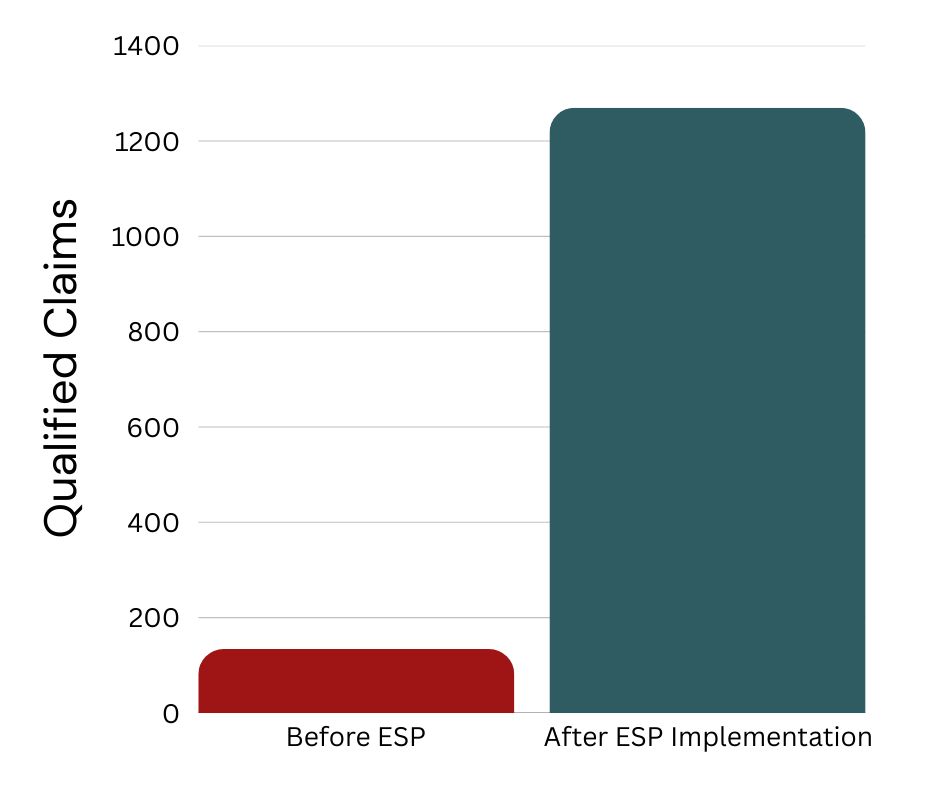
That resulted in a 6,500% increase in captured claims net revenue.
The entity didn’t suddenly grow. Their volume didn’t spike overnight. The opportunity was already there — it simply wasn’t being captured.
This situation is not unique.
Many covered entities:
Even organizations with strong compliance teams can struggle to keep up with ongoing manufacturer changes.
Dispensing reality evolves. Manufacturer policies evolve. If ESP designations don’t evolve with them, gaps form quietly.
In this case, all of ESP was a gap. In other organizations, the gaps may be smaller, but still financially meaningful.
ESP participation isn’t just about initial registration. It requires:
At RxTrail, we regularly perform ESP analyses for our customers to ensure their setup reflects current dispensing patterns and manufacturer policies.
Low contract pharmacy performance isn’t always about volume.
Often, it’s about structure.
When designations align with dispensing reality and manufacturer requirements, even a single contract pharmacy can generate meaningful 340B impact.
For smaller entities with limited internal bandwidth, ESP optimization is one of the most straightforward ways to improve performance without increasing operational burden.
We act as an extension of your 340B team by providing:
Many organizations don’t realize what they’re missing until someone reviews the structure closely.
If your ESP designations haven’t been reviewed recently, or if you’re unsure whether they were ever fully optimized, it may be worth a closer look.

